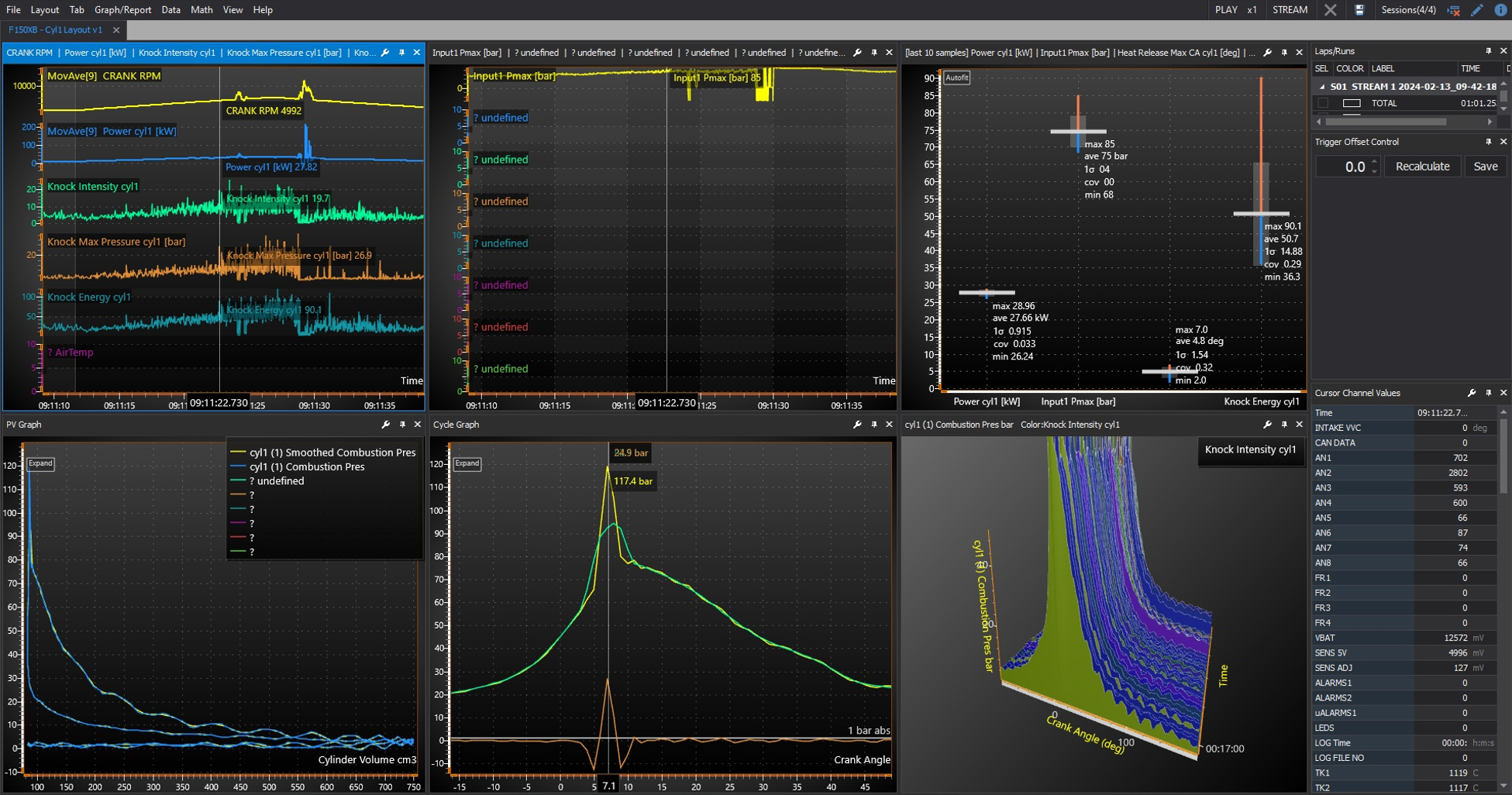
The knock threshold did. And it moves constantly, because knock isn't governed by a single variable. It's the result of end-gas temperature, pressure, and exposure time all acting at once, and every one of those is influenced by conditions that shift between pulls, between sessions, and between seasons.
Most of the content around knock focuses on what it is and how to detect it. This article is about the other side of the problem. Why it shows up when it does, what's actually moving the threshold, and what that means for how you approach calibration.
What determines when knock occurs
Knock in a spark ignition engine is primarily caused by autoignition of the end-gas. The end-gas is simply the unburned portion of the air-fuel mixture ahead of the flame front. During normal combustion, the flame front propagates smoothly through the mixture. Knock happens when the end-gas reaches a combination of temperature and pressure that causes it to ignite spontaneously before the flame front gets there.
The key idea is that autoignition doesn't happen instantly. There's a delay period between the end-gas being exposed to elevated temperature and pressure and when it actually ignites. If the flame front reaches the end-gas before that delay expires, combustion completes normally. If the delay runs out first, you get knock.
Knock isn't random. It occurs when end-gas temperature, pressure, and exposure time combine to exceed the autoignition threshold for the fuel.
So knock likelihood comes down to three things acting on the end-gas simultaneously. Temperature, pressure, and how long the end-gas is exposed to those conditions. Every variable that influences knock does so by affecting one or more of these three factors.
The variables that move the threshold
Here's where the multi-variable nature of knock becomes clear. None of these factors operate in isolation, and a change in any one of them shifts the overall knock threshold of the engine.
Ignition timing
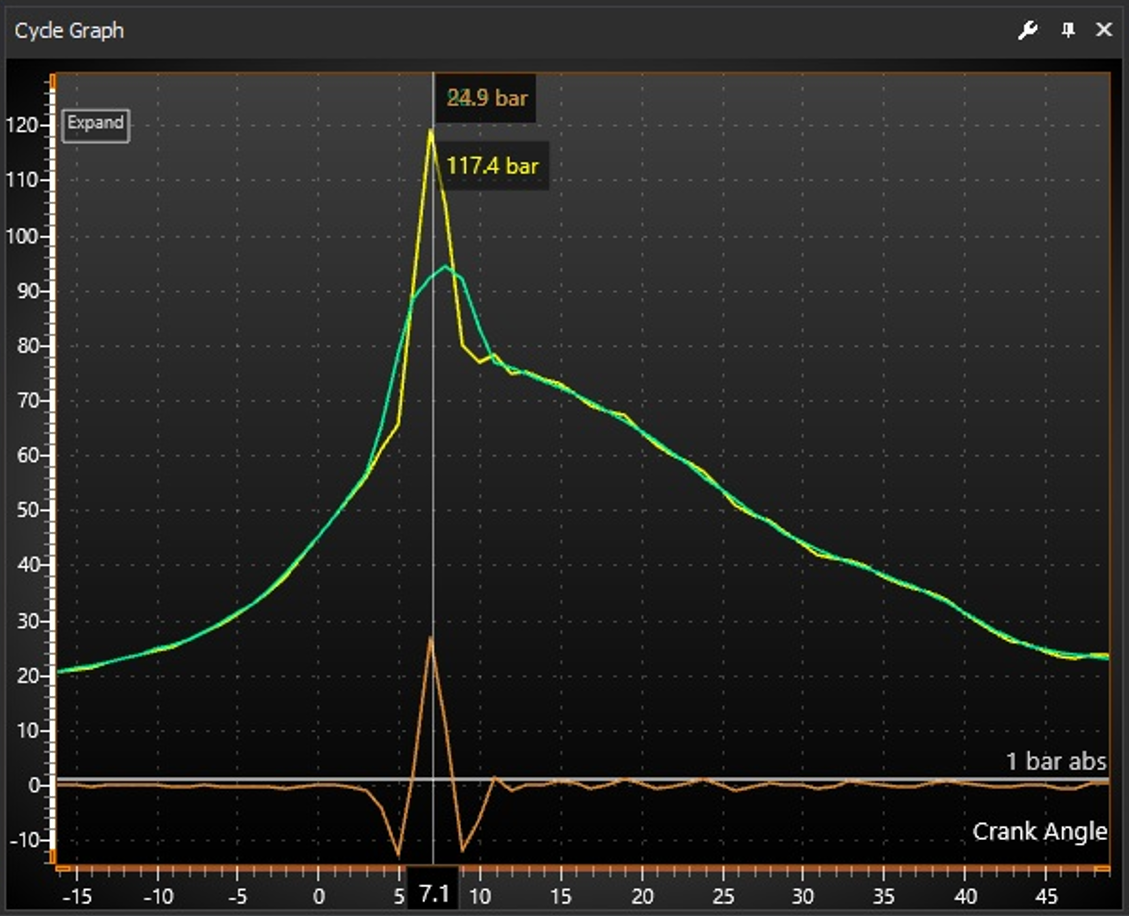
This is the most direct lever a calibrator has. Advancing the ignition timing fires the spark plug earlier in the engine cycle, which means combustion pressure builds while the piston is still rising on the compression stroke. The combined effect of mechanical compression and combustion heat release produces higher peak temperatures and pressures in the cylinder. More advance means the end-gas is exposed to more severe conditions for longer, increasing knock likelihood.
Reducing timing does the opposite. The heat energy from combustion is released later in the cycle as the piston is already moving down the bore, reducing the combined pressure and temperature peak. This is why pulling timing is usually the first response when knock is detected.
Compression ratio
Higher static compression means the mixture is squeezed into a smaller volume before the spark plug fires. This raises both pressure and temperature before combustion even begins. An engine with a 12:1 compression ratio will have a lower knock threshold than the same engine at 10:1, all else being equal.
This becomes particularly relevant when fitting forced induction to a naturally aspirated engine. The combination of high static compression and boost pressure can push end-gas conditions well past the autoignition threshold, which is why compression ratio reductions are common on turbo conversions.
Boost pressure
Boost increases the starting pressure and density of the mixture entering the cylinder. More pressure at the start of the compression stroke means more pressure at the end, and the act of compressing the air with a turbo or supercharger also raises its temperature before it even reaches the cylinder. Even with intercooling, the intake charge is typically warmer than ambient.
Boost raises the starting line for both pressure and temperature. Everything that happens after the intake valve closes builds on top of that elevated baseline.
The result is that boosted engines are almost always more knock-limited than their naturally aspirated equivalents. This is also why increasing boost without re-evaluating ignition timing is a reliable way to damage an engine.
Intake air temperature
Higher intake air temperatures mean the end-gas starts at a higher temperature before compression and combustion add to it. This shortens the autoignition delay and brings the engine closer to the knock threshold.
In forced induction applications, post-intercooler temperatures above 50-60°C start to have a measurable effect on knock margin, particularly under sustained load or heat-soaked conditions. This is one reason why intercooler efficiency matters far more than most people give it credit for.
The relationship goes both ways. Lowering intake air temperatures extends the autoignition delay and moves the engine further from knock. Getting the coldest possible air into the engine, whether through better intercooling, cold air ducting, or heat shielding, is one of the most effective ways to increase knock margin without changing the calibration at all.
Coolant temperature and heat soak
This one catches people out because it doesn't show up on a single dyno pull. Coolant temperature affects the temperature of the cylinder walls, combustion chamber surfaces, and valves. When these components are hotter, they transfer more heat into the incoming charge and into the end-gas during combustion.
An engine that runs clean at 85°C coolant temp on a dyno might start knocking at the same timing and load at the track after sustained hard driving pushes coolant to 100°C+. The calibration hasn't changed. The conditions have.
A tune that's safe on a cool morning dyno pull can be on the edge of knock after three laps of sustained full-throttle driving. The timing didn't change. The temperatures did.
This is also why heat soak matters. After a hard run, if the engine sits at idle or in traffic, component temperatures continue to climb even though load has dropped. The next time you go to full throttle, the engine is starting from a hotter baseline than it was for the previous pull.
Fuel octane
Octane rating is a standardised measure of a fuel's resistance to autoignition. Higher octane fuels can withstand more severe end-gas conditions before knocking. This means a higher octane fuel effectively raises the knock threshold of the engine, giving the calibrator more room to advance timing towards MBT or run more boost.
A practical rule of thumb for modern four-valve overhead cam engines is roughly 1 degree of additional ignition timing per 1 octane number increase. Going from 95 RON to 98 RON might give you 3 degrees of extra timing before the knock threshold is reached. That doesn't sound like much, but on some engines it can translate to meaningful power gains.
The flip side is equally important. If the fuel quality drops, so does the knock threshold. An engine tuned on 98 RON that gets filled with 95 will have less margin, and depending on how close to the limit the tune was, it might knock.
Air-fuel ratio
Enriching the mixture beyond stoichiometric affects knock in a couple of ways. The additional fuel provides some charge cooling through latent heat of vaporisation as the fuel evaporates and absorbs heat from the intake charge. This lowers end-gas temperatures slightly. A richer mixture can also increase combustion speed, reducing the time the end-gas is exposed to elevated conditions.
However, for gasoline, the charge cooling effect of additional fuel is often overstated. Going from lambda 1.0 to lambda 0.85 on straight gasoline provides roughly 3°C of additional maximum charge cooling potential. With port injection, you're getting about a third of that in practice.
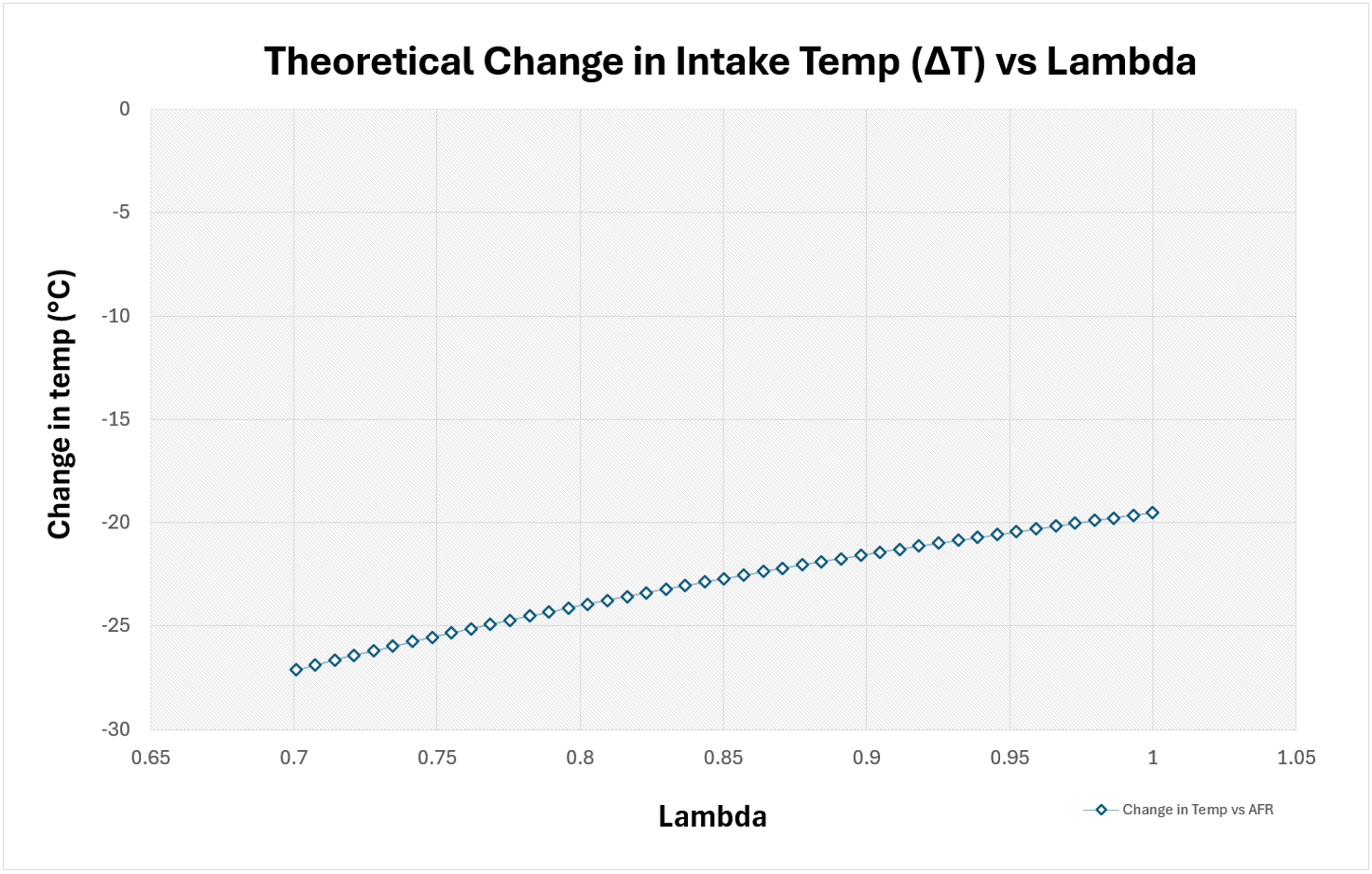
Fuels with higher heat of vaporisation tell a different story. E85, methanol, and water-methanol blends absorb significantly more heat during vaporisation, and direct injection amplifies the effect by pulling most of that heat directly from the intake charge rather than from manifold and port surfaces. But for gasoline on a port-injected engine, the numbers are modest.
The more impactful approach is to ensure intake air temperatures are as low as possible in the first place, through good intercooling and cold air supply, rather than relying on excess fuel to provide a cooling effect.
Engine speed
Higher RPM generally increases the knock threshold. The engine is cycling faster, which means the intake charge spends less time in contact with hot surfaces like intake ports, valves, and cylinder walls. The end-gas starts at a lower temperature as a result.
This is a general trend, not a rule. Some engines are most knock-prone at low-to-moderate speeds under medium-to-high load, which is where cylinder pressures are high but the engine isn't spinning fast enough to benefit from reduced heat transfer time. This is also the operating region where Low Speed Pre-Ignition (LSPI) is a concern on modern high-boost direct-injected engines.
Combustion speed
If the flame front moves through the mixture faster, there's less time for the end-gas to reach autoignition conditions before it's consumed by normal combustion. Faster combustion effectively shrinks the window in which knock can occur.
Combustion speed is influenced by engine design (combustion chamber shape, spark plug location, bore diameter), mixture density, and fuel properties. A compact combustion chamber with a centrally located spark plug will have faster burn times than a large, flat chamber with a side-mounted plug, simply because the flame front has less distance to travel.
From a calibration perspective, faster combustion shows up as needing less ignition advance to achieve MBT. It also tends to extend the knock-limited spark advance (KLSA) further towards MBT, which is exactly what you want.
Why the interaction matters more than individual variables
The real challenge with knock is that all of these variables are moving at the same time. A tune might be perfectly safe under the conditions it was calibrated at, but a combination of higher ambient temperature, slightly lower fuel octane, and a heat-soaked engine after sustained driving can move the knock threshold enough to cause problems.
This is why treating knock threshold as a single number is dangerous. "This engine can handle 20 degrees of timing" is only true under the specific set of conditions where that was measured. Change the conditions, and the number changes with it.
Knock threshold is a surface, not a point. It moves with every variable that affects end-gas temperature, pressure, and exposure time.
The practical takeaway for calibration is to think about knock as a system of interacting variables. When you encounter knock, ask yourself three questions. Is pressure higher? Is temperature higher? Is exposure time longer? The answer will point you towards the variable that's moved and the appropriate response.
If it's a temperature issue, the answer might be better cooling, not less timing. If it's a fuel issue, the answer might be higher octane, not less boost. Pulling timing is always an option, but it's not always the best one, and it always comes at the cost of power and efficiency.
Key points
- Knock occurs when end-gas temperature, pressure, and exposure time exceed the fuel's autoignition threshold
- Knock threshold is not a fixed value. It changes with ignition timing, compression ratio, boost, intake air temperature, coolant temperature, fuel octane, AFR, and engine speed
- These variables interact simultaneously, which means conditions that are safe in one scenario can produce knock in another without any change to the calibration
- The charge cooling effect of a richer mixture is often overstated for gasoline. Ethanol, methanol, and water-methanol blends have significantly higher heat of vaporisation and provide genuine cooling benefits, particularly with direct injection. Even so, ensuring the coldest possible intake air through intercooling and cold air supply remains the foundation
- When troubleshooting knock, identify which variable has changed rather than defaulting to less timing
- A calibration validated under only one set of conditions is not a finished calibration
Related Resources
Understanding knock variables is Stage 3 and Stage 5 territory. The Calibration Competence and EFI Master Programs cover knock management strategy, compensation calibration, and the frameworks to handle multi-variable problems like this systematically. Take the free assessment to find out which Program fits your goals.
Find Your ProgramGet notified of new articles
One article per week on EFI fundamentals, calibration principles, and diagnostic thinking. No spam.
You're subscribed. We'll let you know when new articles are published.